
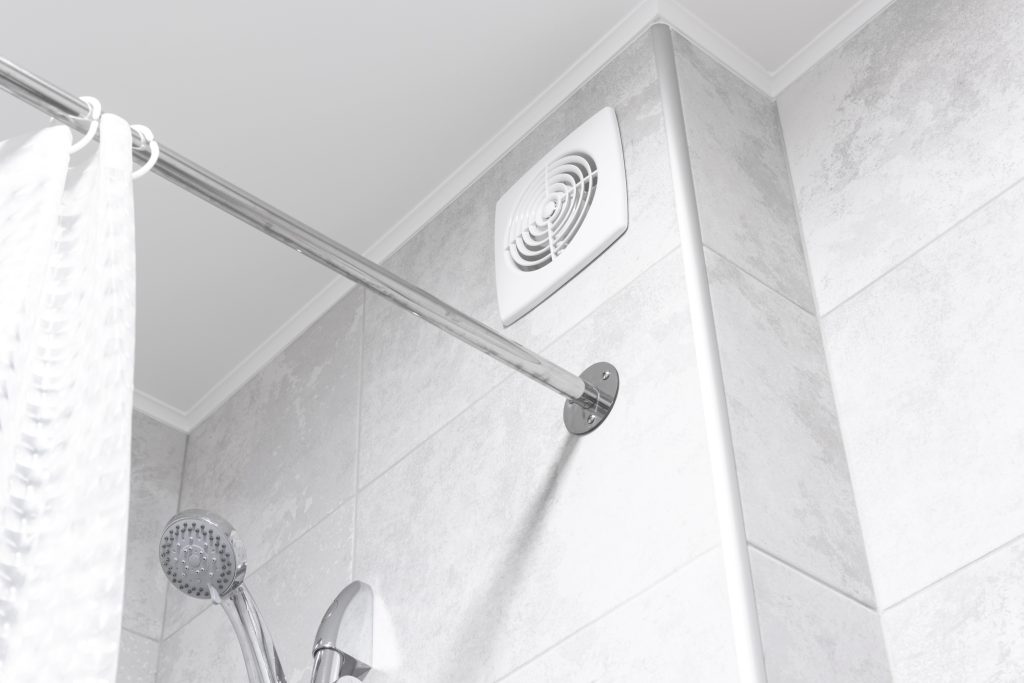
Why smart bathroom ventilation matters
Moisture is the enemy of a healthy bathroom. Warm showers release steam that can feed mold, leave paint peeling, and cause persistent odors. Good bathroom ventilation moves that damp air outside before it can settle on walls, mirrors, and ceilings. The key is not just which fan you buy, but where you install it, how you duct it, and how quiet it runs. This guide explains bathroom fan placement, proper duct routing, and sound ratings, so your new setup performs well and stays quiet. If you are in Southeastern Wisconsin, the local climate makes correct installation even more important, and the certified pros at Northern Mechanical can help you plan and install the right solution for your space.
How to choose the right fan: CFM and sound ratings
CFM sizing in simple terms
CFM stands for cubic feet per minute. It is a measure of how much air a fan can move. Choose a fan with enough CFM to clear the room within a few minutes. A common rule of thumb is 1 CFM per square foot of bathroom floor area for rooms with 8-foot ceilings. For example, a 70 square foot bath usually needs a 70 CFM fan. If your ceiling is higher than 8 feet, multiply the added height by the room area to get extra CFM. Large tubs, steam showers, and separate water closets may require more airflow or an additional fan.
Another method comes from ventilation standards that recommend 8 air changes per hour for bathrooms. You can estimate CFM by calculating room volume and dividing by 7.5. Both methods aim to ensure enough air is pulled out to control humidity and odors. In practice, pick the next size up if you have a long or restrictive duct run, since static pressure reduces airflow. For many standard bathrooms, 80 to 110 CFM is a practical range. Larger primary bathrooms often need 150 CFM or more, or the use of two fans.
Quiet operation and sound ratings that matter
Sound ratings are measured in sones. Lower means quieter. Fans rated at 0.3 to 0.7 sones are very quiet. Fans around 1 to 2 sones are quiet enough for daily use without annoyance. Units above 3 sones are noticeably loud and may discourage regular use. Quiet fans get used longer and more often, which leads to better moisture control. Look for Energy Star models with efficient motors and well-designed housings that keep noise down while maintaining strong airflow. ECM and DC motors often deliver better performance at lower sound levels.
Features that improve everyday use
Helpful features can make your bathroom ventilation more effective. Popular options include humidity sensors that turn the fan on when moisture rises, timer switches that run the fan for 20 to 30 minutes after a shower, and motion sensing controls that keep the fan working when the room is occupied. Fan-light combinations add illumination, and heater-fan units can warm the room during winter. In cold climates like Wisconsin, continuous low-speed ventilation with a boost button provides steady air changes while staying quiet and energy efficient.
Bathroom fan placement best practices
Place the fan near the steam source
Bathroom fan placement should focus on capturing moisture where it forms. The best location is above the shower or as close to the shower or tub as possible, where steam rises first. Check that the fan is rated for installation in wet locations if it will be directly over a shower. If you cannot place the fan over the shower, mount it near the showerhead wall, and route a short, straight duct to the outside. The closer the fan is to the source, the less chance steam has to spread across the room.
Provide coverage for the toilet area
If your bathroom has a separate water closet or toilet alcove, consider using a second fan dedicated to that space. Odors are best controlled when a fan is placed above or near the toilet. A small 50 to 80 CFM fan is often enough for a compact enclosure. Another option is an inline fan with multiple pickup grilles that serve both the shower and the toilet area with a single quiet motor mounted remotely.
One fan or two fans
For large primary bathrooms or rooms with divided zones, one fan may not provide even coverage. If your bathroom is over 100 square feet or includes a walk-in shower, freestanding tub, and separate toilet room, plan on two fans or a multi-port inline system. Multi-port systems use one central fan to pull air from two or three grilles located over the shower, near the tub, and at the toilet. This layout is quiet and efficient and allows you to fine-tune airflow to different zones.
Plan the airflow path with the door in mind
Every fan needs make-up air to work. Undercut the bathroom door by roughly 3 quarters of an inch or use a transfer grille so fresh air can enter as the fan exhausts moist air. Place the fan so it pulls air across the room toward the exhaust point. A good layout has the door on one side and the fan over the shower or near the toilet on the opposite side. This ensures air moves through the entire bathroom rather than short-cycling near the fan.
Consider ceiling height and sloped ceilings
In rooms with high or sloped ceilings, place the fan near the highest point where steam collects. Use a mounting kit designed for angled ceilings to keep the grille flat and the airflow directed properly. Avoid placing the fan too far from the moisture source just to center it visually. Performance should come first, and trim details can be adjusted to keep the look clean.
Retrofit placement tips
When retrofitting an existing bathroom, aim to align the new fan between joists and near a direct duct path to the outside wall or roof. Choose a low-profile housing if space is tight. Use the existing power circuit where appropriate, and confirm wire size and breaker capacity, especially for fans with built-in heaters. Avoid placing the fan under recessed lights that can block airflow or cause unnecessary noise.
Duct routing and termination that prevent condensation
Keep ducts short, straight, and the right size
Even the best fan will struggle if the duct path is long or restrictive. Use the largest duct size the fan supports. Many quiet 80 to 110 CFM fans perform best with 6-inch duct. At a minimum, use 4-inch smooth metal duct, and avoid small, ribbed flex duct that increases resistance. Keep elbows to a minimum, and aim for gentle bends with large radius turns. Each elbow adds equivalent length that reduces airflow. A short, straight run to an exterior wall or roof cap delivers better performance and quieter operation.
Insulation and cold climate details
In Southeastern Wisconsin, winter temps can turn a warm vapor stream into condensation inside a cold duct. Insulate any duct that runs through an unconditioned attic or crawl space. Wrap smooth metal duct with insulation and seal all joints with mastic. Pitch the duct slightly toward the exterior termination so any moisture drains out. Avoid low spots that can collect water, and support the duct to prevent sagging. A well insulated and sloped duct keeps ceilings dry and prevents dripping.
Vent to the outdoors, not the attic
Always terminate bathroom exhaust to the outside. Venting into an attic or soffit can push moist air into insulation and roof cavities, creating mold and wood rot. Use a dedicated wall cap or roof cap with a backdraft damper. If you must terminate near a soffit, choose a location that prevents the moist air from being drawn back into roof vents. The termination cap should include a bird and insect screen and be accessible for periodic cleaning.
Backdraft dampers and air sealing
Install a backdraft damper either at the fan or in-line to prevent cold air and wind from coming back into the bathroom. Some fans include a built-in damper, but an additional in-line damper can help on windy days. Seal all duct joints with mastic and use foil tape rated for HVAC. Air leaks reduce airflow and can cause condensation where warm, moist air meets cold duct surfaces.
Controls and run time for real moisture control
How long to run the fan
A bathroom fan should run during a shower and for at least 20 to 30 minutes afterward. This allows enough time to clear humidity from mirrors, walls, and grout. If you have a humidity sensor, set it to around 50 to 60 percent relative humidity. It will turn the fan on when moisture rises and off when the air dries, saving energy without sacrificing comfort.
Switching options that work
Timer switches and delay-off controls are simple upgrades that improve performance. Motion-sensing switches can start the fan automatically, while humidity-sensing controls can maintain target moisture levels. For fan-light or heater-fan combinations, use separate switches so you can run the fan independently. Consult an electrician or a licensed contractor for wiring and GFCI protection when required, especially for fixtures installed in wet zones.
Common mistakes to avoid with bathroom fan placement
- Venting into an attic or soffit instead of outdoors
- Placing the fan far from the shower or tub where steam collects
- Using undersized or ribbed flex duct that restricts airflow
- Skipping duct insulation in unconditioned spaces
- Not providing a door undercut or make-up air path
- Choosing a loud fan that people avoid using
- Connecting a bathroom fan to other exhaust lines like a dryer or kitchen hood
- Omitting a backdraft damper at the fan or termination
- Underpowering a heater-fan combo on a shared circuit
- Failing to air seal duct joints with mastic and foil tape
- Ignoring clearance to fresh air intakes when placing the wall cap
Product types and what to buy
Ceiling-mounted fans
Traditional ceiling fans are compact, cost-effective, and ideal for standard bathrooms. Look for quiet operation, a sealed housing, and compatibility with a 6-inch duct if possible. Many modern models include a built-in damper and are Energy Star rated for efficiency.
Inline remote fans and multi-port systems
Inline fans place the motor in the attic or a remote location and pull air through one or more ceiling grilles. This setup can be very quiet and is useful when you want to ventilate multiple areas, such as a shower and a toilet room, with one powerful fan. Multi-port systems offer balanced airflow across several pickup points.
Decorative and fan-light combinations
Fan-light combos save space and add a finished look. Be sure the light is rated for the location, especially over a shower. Select LED options for long life and low energy use. Confirm you can control the fan and light separately to encourage proper run time.
Heater-fan combinations
A heater-fan can warm the bathroom quickly on cold mornings. These units draw more power and may require a dedicated circuit. Place the heater outlet to avoid blowing directly on a shower curtain or glass door. Verify all safety and electrical requirements during planning.
Whole-home ventilation options
In some homes, especially tight new construction, a heat recovery ventilator or energy recovery ventilator can provide continuous whole-home ventilation. Bathrooms can connect to these systems for steady moisture control, while a boost switch handles shower duty. This approach is efficient in cold climates and helps manage overall indoor air quality.
Step-by-step overview for a pro-quality install
- Assess the bathroom size, ceiling height, and moisture sources like showers, tubs, and water closets.
- Calculate required CFM and choose a fan with a low sone rating that can handle duct resistance.
- Decide on bathroom fan placement near the shower or tub, and consider a second fan for the toilet area.
- Plan a short, straight duct route to an exterior wall cap or roof cap with minimal elbows.
- Select duct size and materials, preferably smooth metal, and include insulation for unconditioned spaces.
- Choose controls such as a timer, humidity sensor, or motion sensor to ensure adequate run time.
- Cut the ceiling opening, mount the fan securely, and add vibration-isolating hangers if needed.
- Install and seal the duct with mastic, add a backdraft damper if not included, and insulate the run.
- Complete wiring to code, verify GFCI protection if installed in wet areas, and set control features.
- Test airflow at the grille, check the exterior cap for strong discharge, and adjust settings for comfort and noise.
Maintenance to keep performance high
Dust and lint build up on grilles and fan blades over time, which reduces airflow. Clean the grille and housing at least twice a year. Vacuum the fan wheel, wipe the housing, and check for any unusual noise that may indicate wear. Inspect the exterior cap to make sure the damper opens and closes freely. If your duct runs through an attic, confirm the insulation is intact and the duct has not sagged. Regular maintenance will keep your bathroom ventilation system working quietly and efficiently.
Frequently asked questions about bathroom fan placement and noise
Can I place a fan directly over a shower
Yes, as long as the fan is rated for wet locations and installed on a circuit with proper protection where required. This is often the best spot for capturing steam quickly.
What if there is no attic access
Use a slim-profile ceiling fan where joist space is limited, or consider a wall-mounted fan that vents directly outside. There are also retrofit kits designed to fit existing openings with minimal patching.
Do I need a second fan for a separate toilet room
It is a good idea. A small dedicated fan at the toilet keeps odors contained and supplements the main shower-zone fan. An inline multi-port fan can also handle both areas from a single motor.
How quiet is quiet enough
Aim for a fan with a rating of 1.5 sones or less. For spa-like quiet, choose 0.7 sones or below. Make sure the ducting supports the rated airflow, or noise may increase.
How big should the duct be
Use at least 4-inch duct for small fans. For 80 to 110 CFM models, 6-inch duct often delivers better real-world airflow and quieter operation. Always follow the manufacturer’s recommendations.
Why is there condensation dripping from my fan
Condensation usually means the duct is cold, uninsulated, too long, or not sloped to the exterior. Insulate the duct, shorten the run, and add a slight pitch toward the termination. Confirm the damper is not stuck closed.
Why partner with Northern Mechanical in Southeastern Wisconsin
Northern Mechanical, LLC is a trusted provider of plumbing and piping services across industrial, commercial, and residential projects. For bathroom ventilation, you get more than a fan install. You get a thoughtful design that accounts for bathroom fan placement, duct sizing, local code, and our Wisconsin climate. The team at Northern Mechanical brings certified professionals, top-tier workmanship, and 24/7 emergency service when you need fast help. From quiet fans in homes to multi-port systems in commercial locker rooms and industrial wash areas, the company delivers reliable, code-compliant results. If you want a single partner that can handle ventilation, related plumbing considerations, and any required piping adjustments, Northern Mechanical offers a complete solution with clear communication and fair pricing.
Get started with a smarter, quieter bathroom fan
Ready to fix foggy mirrors, musty odors, and noisy fans for good? Start with a quick assessment of your current setup. Note the bathroom size, whether the toilet is in a separate space, and how long it takes for mirrors to clear after a shower. Then plan the right bathroom fan placement, choose a quiet Energy Star model sized for your room, and route an insulated duct straight to the outside with a proper damper. If you want a professional design and installation, Northern Mechanical can help. Our team serves homeowners and businesses throughout Southeastern Wisconsin with dependable scheduling, clean workmanship, and 24/7 support. Contact Northern Mechanical for a consultation and take the first step toward a dryer, cleaner, and quieter bathroom today.


